

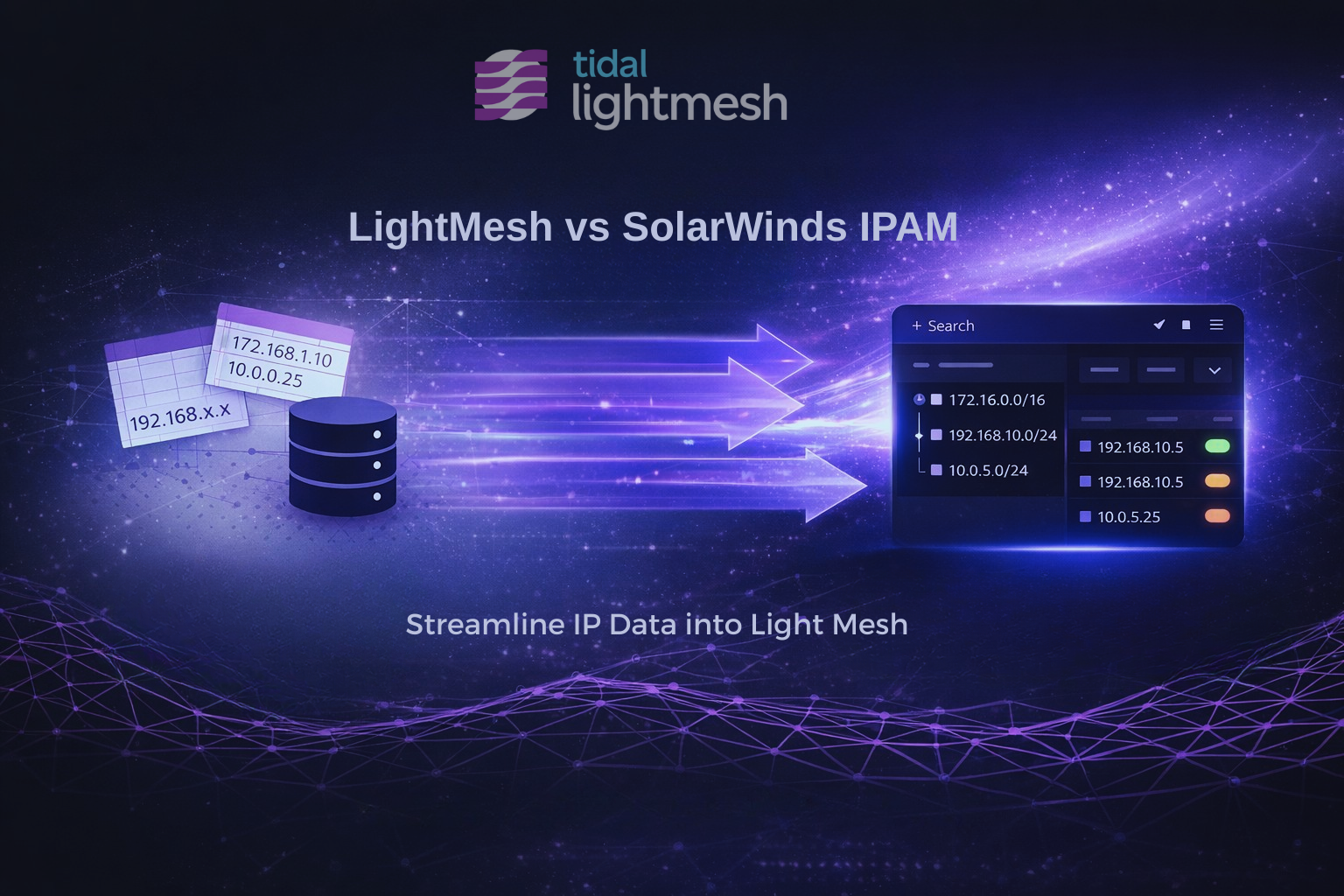
A safer path from SolarWinds IPAM to LightMesh
Many teams evaluate SolarWinds IPAM alternatives at renewal time, when licensing pressure, manual workflows, or cloud visibility gaps make legacy IPAM harder to justify.
LightMesh IPAM gives you a practical migration path: export your SolarWinds IPAM data, import it into LightMesh, validate records in parallel, and cut over when your team is ready.
This is a migration path, not a rip-and-replace project.
Migration workflow
- Export subnets and IP data from SolarWinds (CSV).
- Import into LightMesh with field mapping for custom attributes.
- Validate overlaps, gaps, and capacity in a visual TreeView.
- Run in parallel during a transition window.
- Cut over when stakeholders trust LightMesh as the IPAM source of truth.
Detailed steps: SolarWinds migration guide.
Supported imports
- CSV and XLSX imports for subnets, IP addresses, and related metadata
- Custom fields to preserve SolarWinds properties during migration
- Bulk import with templates for zones, sites, and contacts
- API and CLI for ongoing automation after migration
Why teams choose LightMesh
- Cloud-ready IPAM with AWS and Azure visibility alongside on-prem data
- Visual subnet planning for clearer capacity and overlap review
- SaaS or self-hosted deployment options
- API-first architecture for integrations your team already runs
- Transparent pricing from Free through enterprise tiers
Next steps
Start with a subset of your SolarWinds IPAM data, validate it in LightMesh, and compare both views before cutover.
Download the LightMesh datasheet or start free with LightMesh.