

What is IPAM?
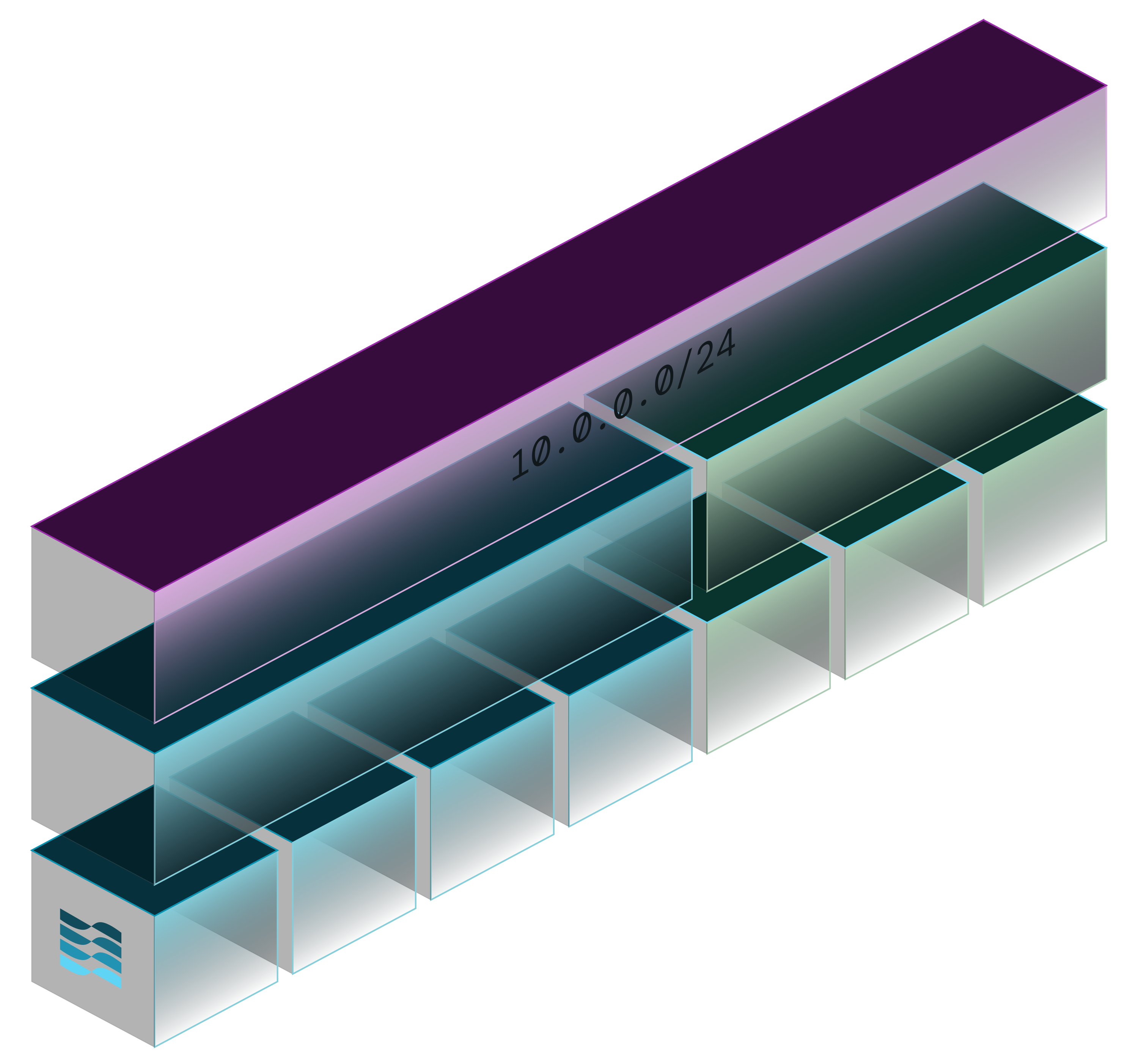
IPAM stands for IP Address Management. It is the practice of tracking, planning, and governing IP addresses and subnets across an organization’s networks - cloud, on-prem, and hybrid.
IPAM answers questions like:
- Which subnet does this IP belong to?
- Who owns this address, and when was it assigned?
- Are there overlapping CIDR ranges between VPCs or sites?
- How much address space is left before we run out?
Without IPAM, teams fall back to spreadsheets, emailed updates, and tribal knowledge. The result is duplicate allocations, stale records, and slow incident response.
What IPAM means in practice
IPAM is more than a list of IPs. A working IPAM system provides:
- Inventory - every subnet and assignment recorded in one place
- Hierarchy - subnets grouped into zones, sites, and regions
- Planning - visual tools to design address space before deployment
- Discovery - automatic ingestion from DHCP, cloud APIs, and imports
- Audit - change history for every record, available on demand
- Search - one query across cloud, on-prem, and DHCP data
Why IPAM matters for cloud networks
Cloud providers give you native tools - AWS IPAM, Azure Network Watcher - but each is scoped to one provider. Most enterprises run AWS and Azure together, plus on-prem DHCP and legacy IPAM exports.
A unified IPAM gives you one model across all of it. That matters when you are:
- Designing a landing zone and need to avoid overlaps across accounts
- Peering VPCs or VNets and need to confirm CIDR ranges do not collide
- Responding to an incident and need to resolve an IP to an owner in seconds
- Passing an audit and need change history for every public address
How IPAM works with DHCP and cloud
Modern IPAM ingests data from the systems that already know your network:
- DHCP servers report scopes, leases, and hostnames
- Cloud APIs report VPCs, subnets, and assignments
- Imports bring in spreadsheet or legacy IPAM exports
The IPAM system normalizes that data into one hierarchy. Your team searches, plans, and audits from there - without switching between consoles.
LightMesh does this read-only. It does not push configuration back to your DHCP servers, cloud control planes, or network gear.
IPAM vs DDI
DDI combines DNS, DHCP, and IPAM into one suite. Legacy DDI platforms bundle all three, often with high cost and operational overhead.
IPAM alone covers the inventory, planning, and governance layer. Many teams want IPAM done well without buying a full DDI suite they do not need.
LightMesh focuses on IPAM. It ingests from DHCP and cloud sources read-only, and leaves DNS and DHCP management to your existing servers.
Start with IPAM
LightMesh gives you cloud-first IPAM with DHCP discovery, AWS and Azure sync, visual planning, and audit history. Start free, import your data, and build a source of truth your team can trust.
Start free or follow the getting started guide.
See also: IPAM software and AWS IPAM.